






Choose the workflow before the model
The model is one part of an AI trading setup. Market data, account permissions, order checks, scheduling and the record of each action matter just as much.
A connected assistant suits questions and individual orders. A broker’s native agent keeps that workflow inside the brokerage. Agency adds agents with separate plans, allocations and scheduled reviews. Compare those jobs before deciding between model names.
What to compare
- Data. Can the assistant identify when its prices, holdings and research were updated? Can you open the underlying source?
- Instructions. Does the proposed allocation fit the plan? Ask it to identify any requirement it cannot implement.
- Execution. Which account can it trade, what needs approval, and what software checks happen before submission?
- Explanations. Do trade reasons refer to actual changes and match the recorded orders?
- Cost and continuity. What does a review cost, where does it run, and what happens when authentication expires?
Claude or GPT for investing?
We have not established a reliable investment-performance winner between model families. A strong answer to a research question does not demonstrate better live returns.
Compare models using the same holdings, dated source material and instructions. Start with analysis-only requests. Check arithmetic, source accuracy, missing information and adherence to the task. Do not send duplicate live orders to conduct a comparison.
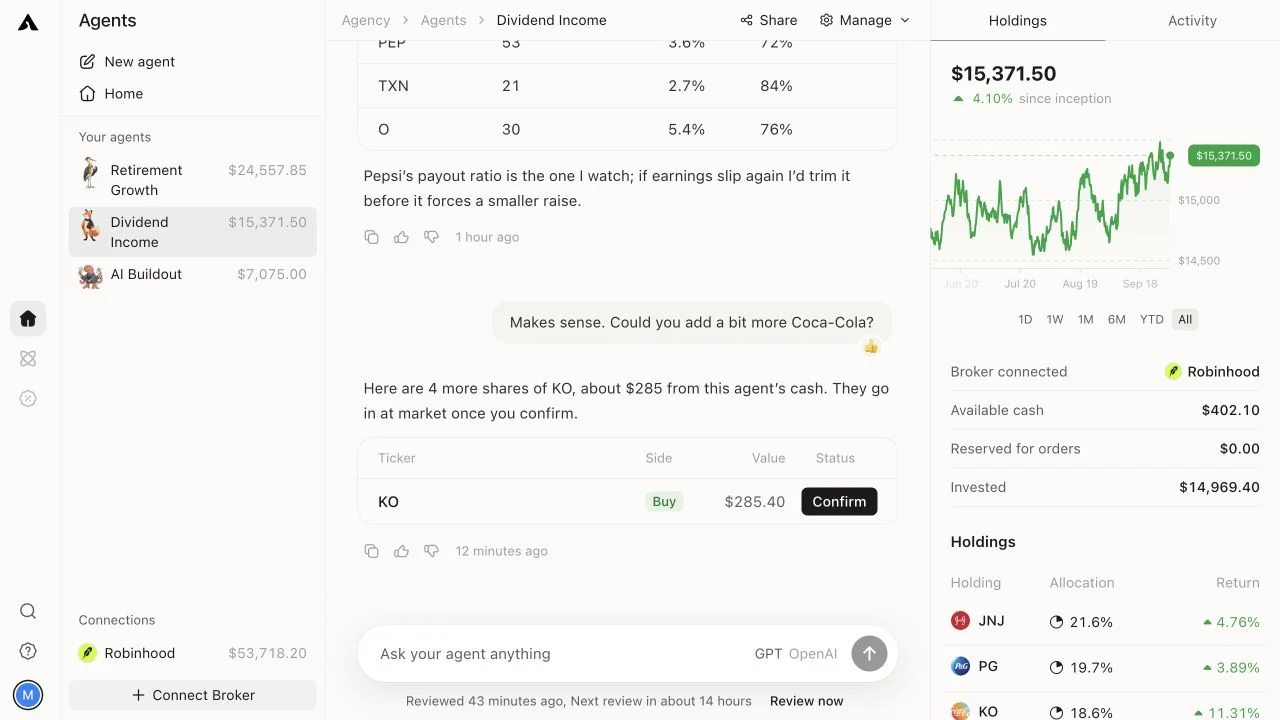
In Agency, Settings → Model controls the model used by agents. The available choices can change. Record any switch when assessing subsequent reviews; a different market period is not a controlled model comparison.
When a simpler tool is enough
If your entire plan is a fixed recurring purchase, you may not need a model. If you want every order approved, do not choose Agency’s funded-agent workflow: its reviews can trade autonomously.
Compare the available types of trading tools, then use consistent measures to judge what happens.