






From an instruction to an order
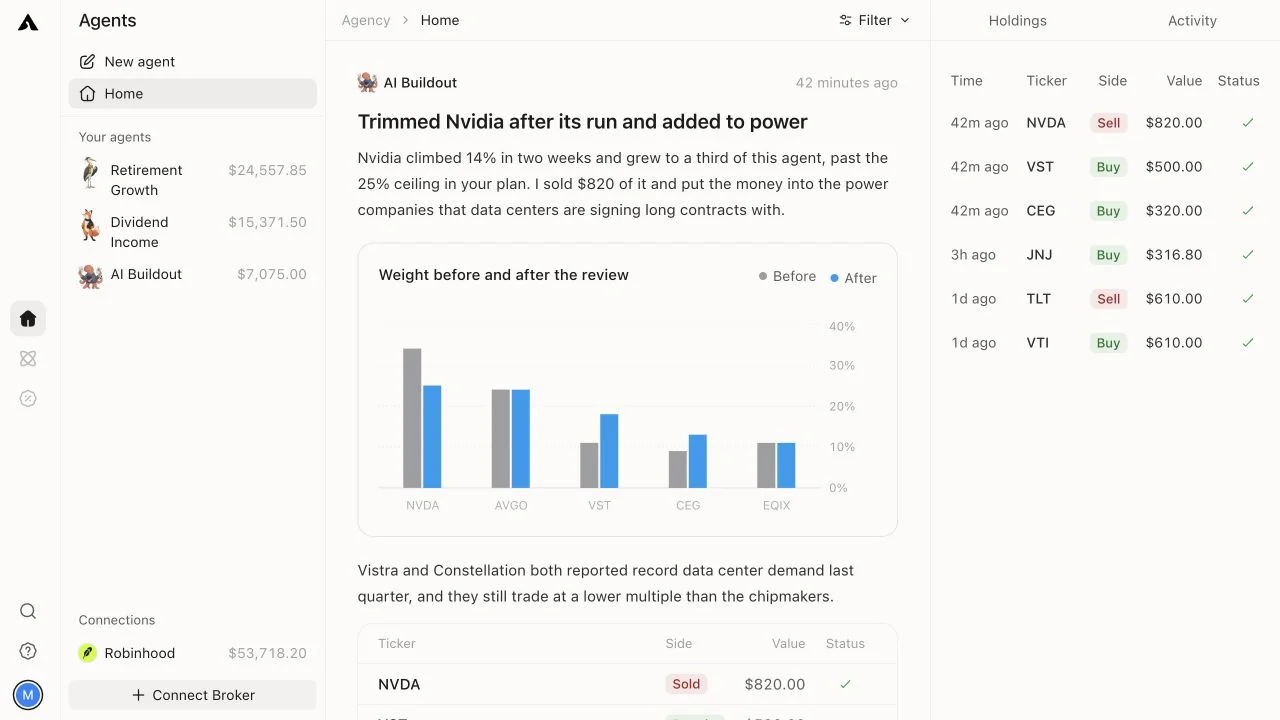
Agentic trading means giving an AI system tools to research an investment decision and act on it. Depending on its permissions, an agent may inspect holdings, fetch market data, propose a trade or submit an order to a broker.
For example, “Review my allocation monthly and explain any changes” requires more than a chat response: a schedule, account data, decision rules, order handling and a record of what happened. Each part can fail independently.
Which kind of automation?
| Setup | What drives decisions |
|---|---|
| Trading bot | A programmed rule, such as buying when a price condition is met. Some bots also use AI. |
| AI trading agent | A model interprets instructions, uses tools and chooses actions within the access it has. |
| Robo-advisor | Typically an advisory service that assigns and maintains a portfolio based on your questionnaire. |
| Recurring purchase | A fixed amount, investment and schedule chosen by you. |
The labels overlap. Inspect the actual permissions and behavior. An “AI-powered” strategy builder may produce fixed rules; another product may ask a model to reconsider holdings at every review.
Who holds the money?
The broker holds the account and handles orders. The agent supplies decisions or instructions. A connection standard such as Robinhood’s trading MCP gives an assistant access to tools; it does not establish a schedule or guarantee sensible decisions.
Agency runs scheduled stock and ETF reviews using money assigned to each agent. It is software, not a broker or registered investment adviser. A funded agent can act without approval of every trade.
Ask these questions before funding
Which account can it trade? What data can it read? What stops it overspending? Where does it run? How do you stop reviews and cancel open orders? Get concrete answers before comparing model names or advertised returns.
See Agency’s controls and remaining risks for that distinction in practice.