






Why the plan matters most
An AI agent can research and trade on its own, but it can only aim at what you tell it. A vague plan gets a generic portfolio. A clear one gets decisions you can check it against, review after review.
What to put in it
- The goal. What the money is for: growth for retirement, income, a purchase, a theme.
- The time. When you’ll need it. Four years and forty years call for very different portfolios.
- The drop you can live with. Say it in numbers if you can: “a 10% drop is fine, 30% isn’t”.
- What to own or avoid. Sectors, companies, funds or asset types, and anything that’s off limits.
- Rules with numbers. “No stock above 25%”, “below 20 times earnings”, “keep 10% in cash”. Numbers make the request measurable, so you can check whether the agent followed it.
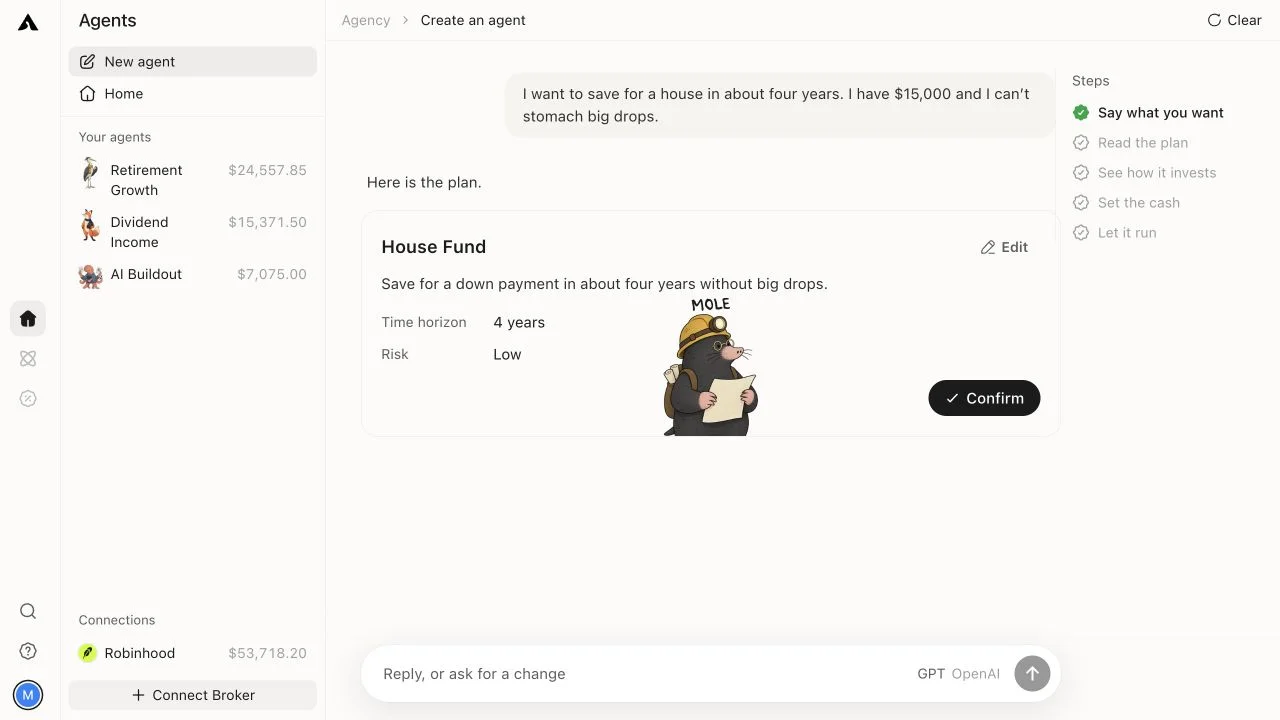
Vague, then clear
VagueMake me money with tech stocks.
ClearOwn large US tech companies for the next five years. No single stock above 25% of this money. Medium risk; a large drawdown would change whether this plan suits me.
VagueSomething safe for my house fund.
ClearI’m buying a house in about four years with this $15,000. Capital preservation matters more than growth; explain the remaining risks. Move more of it into short-term Treasuries as the date gets closer.
VagueBuy good value stocks.
ClearOnly Meta, Apple, Amazon, Netflix and Alphabet, and only when one trades below 20 times next year’s expected earnings. Otherwise stay in cash.
VagueDividend stuff.
ClearCompanies that have raised their dividend for at least 20 years in a row, aiming for about 3% a year in income. Hold for ten years; don’t chase yields above 6%.
A request is not an enforced limit
These examples illustrate clearer wording, not recommended investments. Agency checks an agent’s orders against its assigned cash and holdings. A position cap, yield target or acceptable drawdown written in the plan is an instruction to the model, not a guaranteed software limit. Prices can move between reviews.
Include a review frequency. A monthly allocation check and a daily research review are different jobs with different costs. Specify what should justify a trade, not just when the agent should look.
What to leave out
- Return targets. “Make 30% a year” can’t be followed; it only pushes an agent toward more risk. Say how much risk you’ll take instead.
- Things it can’t do. Agents in Agency don’t short, use margin, trade options or crypto, trade outside market hours, or watch prices between reviews.
- Rules for every agent. Put those in Settings, You, Standing instructions, so each plan stays about its own job.
Check the first look against it
After you confirm the plan, the agent shows how it would invest it. Read it with your plan next to it: does every holding have a reason that matches what you wrote? If not, say what’s wrong in the chat and get a new first look before you fund it.
More on what happens after that: how an AI agent works.